Categories
Nicht kategorisiert

Hans Sima: the exhibition

On Wednesday, October 1st, 2025, the Werner Berg Museum Bleiburg/Pliberk opens a meaningful special exhibition on the political work of Hans Sima, who was governor of Carinthia from 1965 to 1974.

Entitled “Hans Sima – A Political Life,” this multifaceted retrospective impressively documents Sima’s contribution to Carinthian contemporary history. The exhibition was created in cooperation with the Museum of the City of Villach, VICCA, and the Hans Sima Private Foundation and can be seen until November 9, 2025, in the creative space of the Werner Berg Museum next to the current exhibitions “Pasolini, Berg, Hrdlicka” and “Hans-Peter Profunser.”

Opening of the Hans Sima exhibition on October 1st, 2025.

Political milestones in pictures

The exhibition is designed as a traveling exhibition and has already been shown in Villach and Klagenfurt. Museum director Arthur Ottowitz points out the regional connection and historical significance: “Former governor Hans Sima had close ties to Bleiburg/Pliberk and the Werner Berg Gallery.” The exhibition reconstructs Sima’s political life through photographic highlights – from his early days as a member of parliament to his retirement from politics. The focus is not only on the 1972 conflict over bilingual place-name signs, but also on Sima’s role as a bridge builder between cultures and nations in the Alps-Adriatic region.

Exhibition in four languages – a symbol of his vision

A key feature of the exhibition is its multilingualism: all content is available in German, English, Italian, and Slovenian. This reflects Sima’s political vision of positioning Carinthia as an active partner at the intersection of three countries.

“Sima planned to give Austria’s southernmost province an active role at the intersection of the three countries Austria, Italy, and the former Yugoslavia. He therefore intensified specific projects within the framework of the Alps-Adriatic Cooperation. The fact that this exhibition is presented in four languages is designed to underline this,” emphasizes contemporary history professor Oliver Rathkolb, who curated the exhibition together with Villach museum director Andreas Kuchler and contemporary historian Petra Mayrhofer.

Oliver Rathkolb (left) and Dr. Peter Kaiser, Governor of Carinthia (right), at the opening of the Hans Sima exhibition.

A peek into the private archive

The exhibition is being financed by the Hans Sima Private Foundation, which is dedicated to researching Carinthia’s contemporary history. Its chairwoman is Ulli Sima, Vienna’s acting city councilor for urban development, mobility, and public utilities, and granddaughter of the former governor. “The events surrounding the 1972 place name dispute preoccupied my grandfather until his death. He meticulously collected notes, photos, and other documents from his active career and made them available to posterity by establishing the Hans Sima Private Foundation,” recalls Ulli Sima.

With its stop in Bleiburg/Pliberk, the exhibition is now also finding its way to a particularly symbolic area of Carinthia—a mark of dialogue and recognition.

A politician at the front line of historical tensions

Hans Sima was a politician who bore responsibility in turbulent times – not only in Carinthia, but also beyond the state borders. For Governor Peter Kaiser, one thing is certain: “He was ahead of his time, not only in connection with the place name sign issue, which left him with a certain trauma. Today is the time to officially say thank you to Hans Sima. He was a great governor and set an important course for our state. Throughout his life, he stood up for his convictions and beliefs.“ Oliver Rathkolb classifies Sima historically as a ”modernizing personality.“

Multimedia approaches and accessible communication

An additional highlight of the exhibition is the inclusion of representative excerpts from the ORF III documentary “Hans Sima: A Politician’s Life in Turbulent Times.” An audio guide in four languages not only makes the exhibition more accessible to international guests, but also assists visually impaired visitors on their tour.

Political work with a lasting legacy

Hans Sima was not only governor, but also a member of the Carinthian state parliament, a member of the Federal Council, and a member of the state council. As a consistent advocate of dialogue, especially with the Slovenian ethnic group, and as a promoter of art, culture, and education—for example, through his support for the founding of the University of Klagenfurt—he left a long-lasting mark. His resignation in 1974 in the wake of the place name sign conflict marked the end of his active political career, but his ideas and work remain highly relevant—as this exhibition impressively demonstrates.


Categories
Nicht kategorisiert

Controlled Freedom – The Allied Forces in Vienna

April 10th – September 7th, 2025

Curators: Oliver Rathkolb, Elisabeth Heimann-Leitner, Anne Wanner

When Vienna was liberated in early April 1945, the city was characterized by destruction, housing shortages, hunger, and cold. Nonetheless, culture came back right away. On April 27, arts events resumed on the orders of Soviet officers. Shortly thereafter, the other Allies – France, Great Britain and the USA – also became culturally active. The resulting influx of international culture was unprecedented in the city’s history.

Accompanying the country’s economic and political reconstruction, the many activities were intended to create the emotional basis for the emergence of a distinct national consciousness – in other words, the development of an identity independent of Germany.

The exhibition “Controlled Freedom” sheds light on the formative influence of the diverse cultural offerings. It documents a transformative project that lives on to the present day – the creation of a democratic Austria.

April 30th – December 31st, 2025

Curators: Oliver Rathkolb, Elisabeth Heimann-Leitner, Anne Wanner

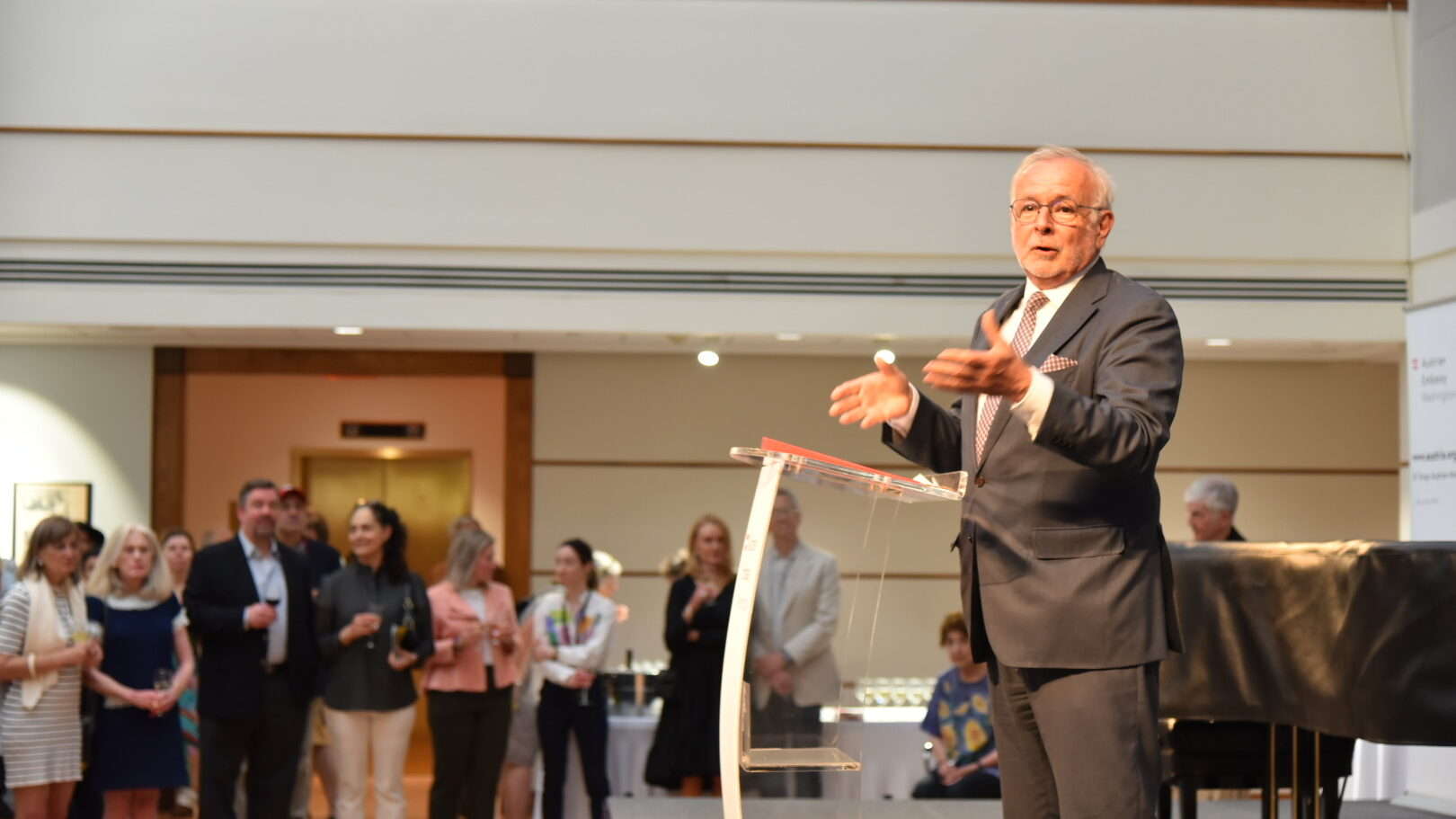
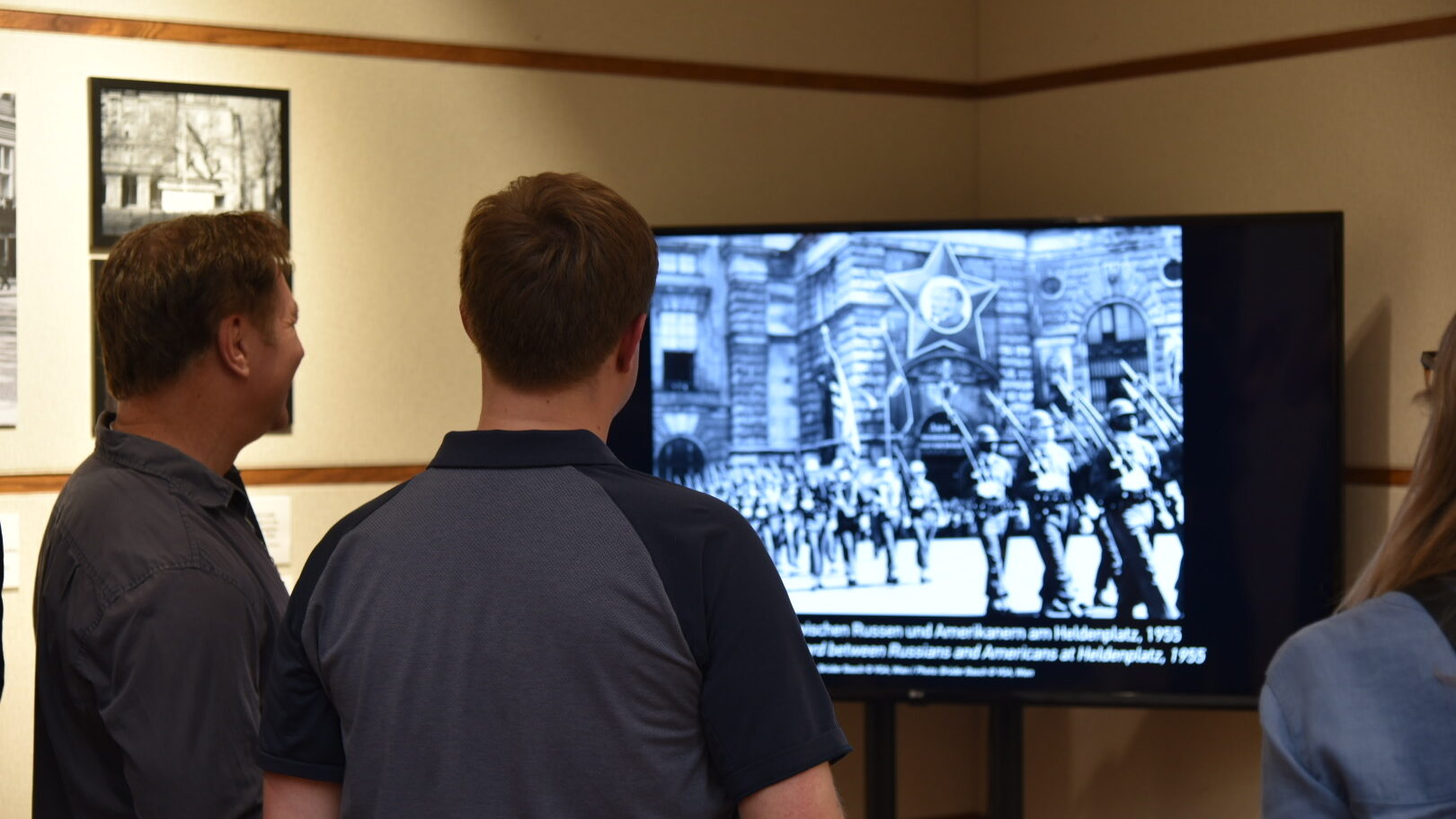
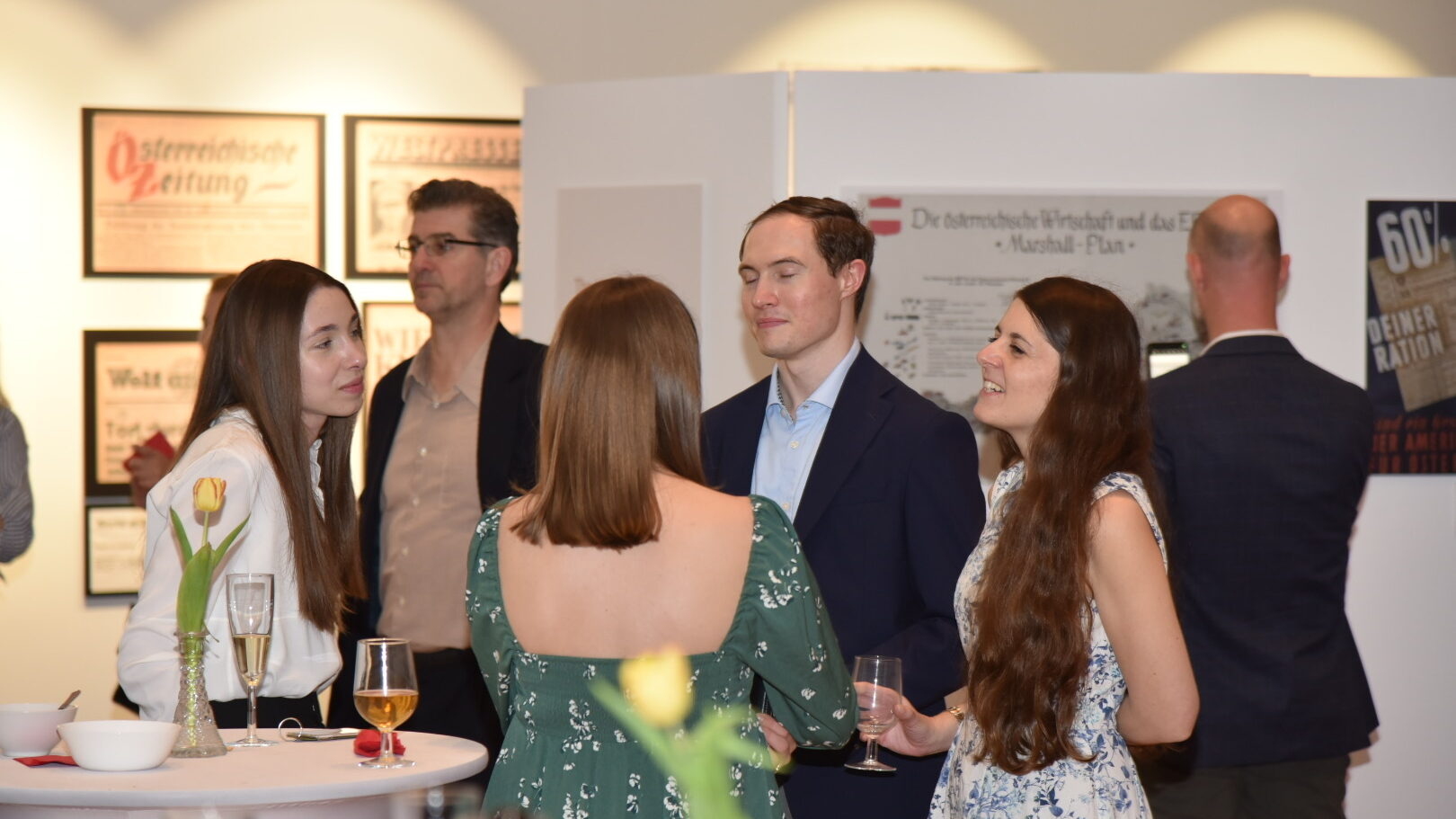
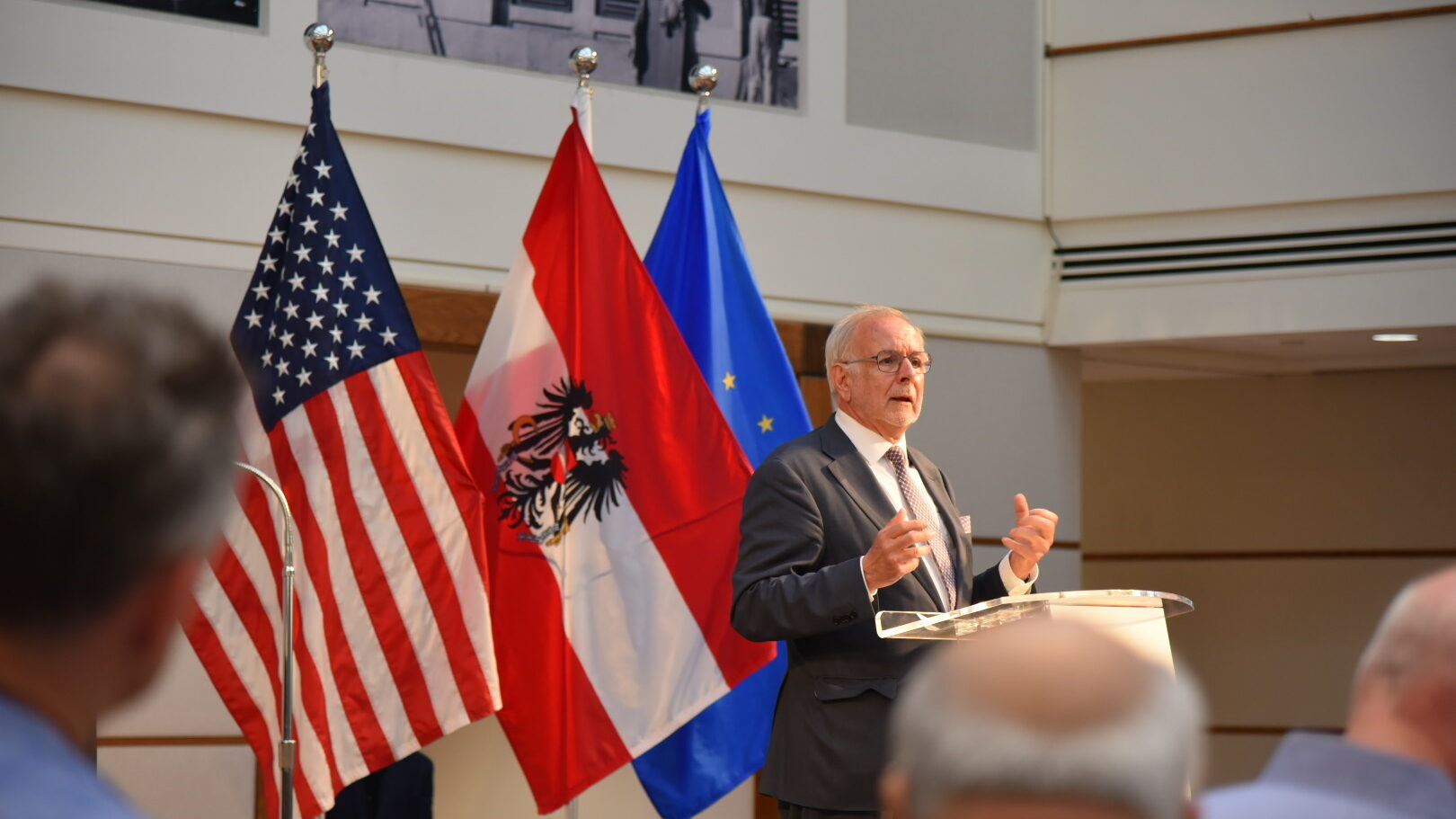
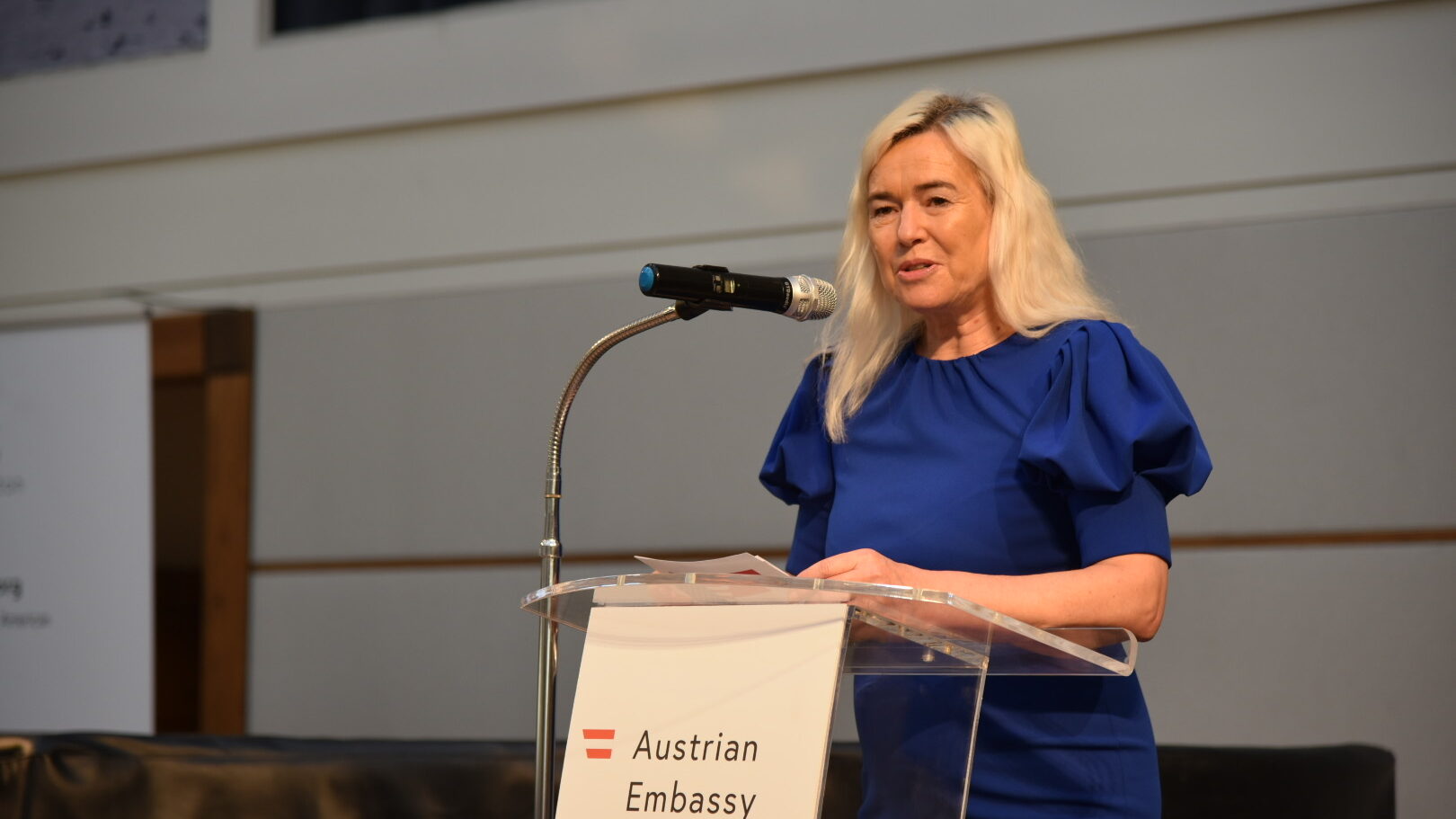
Through the collaboration of the Austrian Embassy in Washington, DC, the Wien Museum, the Austrian Marshall Plan Foundation, and VICCA we were able to take our exhibition to the US, where it can be viewed for the rest of 2025.

Viewings are available on Tuesday and Thursdays, excluding U.S. and Austrian holidays, between 11:00 am and 3:00 pm. Rgistration is required, please send an e-mail to washington-id@bmeia.gv.at.


The exhibition is accompanied by publications in German, English, French and Russian with contributions from Thomas Angerer, Wolfgang Duchkowitsch, Veronika Floch, Christian Glanz, Richard Hufschmied, Monika Knofler, Marion Krammer, Michael Kraus, Johanna Maria Lerchner, Wolfgang Mueller, Agnes Meisinger, Karin Moser, Manfred Mugrauer, Wolfgang Pensold, Hans Petschar, Monika Platzer, Oliver Rathkolb, Peter Roessler, Günther Stocker, Markus Stumpf, Margarethe Szeless.

Kontrollierte Freiheit. Die Alliierten in Wien – Kulturpolitik 1945–1955 

Hg. v. Oliver Rathkolb

Noch nie zuvor wurde die Wiener Bevölkerung in kurzer Zeit so intensiv mit internationalen Kultureinflüssen konfrontiert wie nach der Befreiung im April 1945. In diesem Buch werden die Auswirkungen alliierter Kulturpolitik auf Bildende Kunst, Film, Literatur und Bibliothekswesen, Musik und Theater, Pressefotografie, Printmedien, Rundfunk und Sport sichtbar. Junge Künstler*innen kamen erstmals in Kontakt mit der zuvor verbotenen kritischen Moderne. Die politischen Ziele der alliierten Kulturoffensive reichten von Entnazifizierung über die Konstruktion einer nicht-deutschen Identität bis zum Kampf um die ideologische Positionierung Österreichs.

232 Seiten, Format: 220 x 290
ISBN: 9783701736386

EUR 29,00


Controlled Freedom: Allied Cultural Policy in Vienna, 1945–1955

Edited by Oliver Rathkolb and Agnes Meisinger
Translated by John Heath

Following liberation in April 1945, Vienna was characterized by destruction, cold, hunger, and an acute housing shortage. Yet cultural life soon returned: as early as 27 April, Soviet officers ordered its revival. It was not long until the other Allies – France, Britain, and the USA – launched their own cultural campaigns. The many cultural activities under Allied occupation were intended not only to underpin economic and political rebuilding, but also to promote an Austrian national consciousness – a separate self-image independent from Germany. This volume is the first to show the impact of Allied cultural policy in the fields of fine art, film, literature and libraries, music and theatre, press photography, print media, radio, and sport, thereby documenting an achievement that can still be felt today: the creation of a democratic Austrian identity.

235 pages, with 40 illustrations/graphics

ISBN: 978-3-8471-1852-7

EUR 36,00

Liberté sous contrôle. Les Alliés à Vienne, 1945–1955

Edited by Oliver Rathkolb and Agnes Meisinger
Translated by Béatrice Pellissier

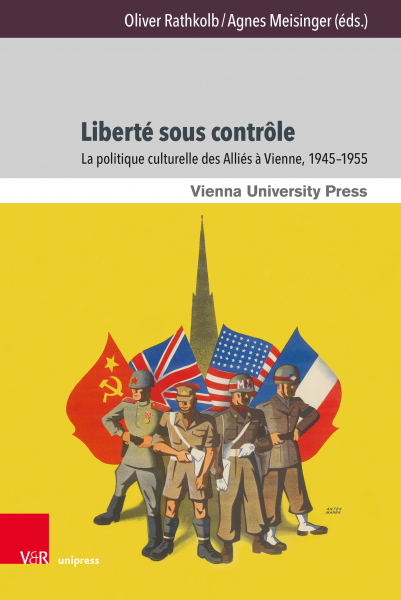
Après la libération de Vienne en 1945, la vie quotidienne fut marquee par la destruction, la pénurie de logements, la faim et le froid. Pourtant, la vie culturelle reprit rapidement. Dès le 27 avril, les activités culturelles furent relancées sur ordre des officiers soviétiques. Peu de temps après, les autres Alliés – la France, la Grande-Bretagne et les États-Unis – firent également leur entrée sur la scène culturelle. À côté de la reconstruction politique et économique, les nombreuses activités culturelles lancées durant la période de présence alliée visaient à poser les bases émotionnelles d’une conscience nationale autrichienne – c’est-à-dire l’élaboration d’une identité propre, indépendante de l’Allemagne. Cet ouvrage collectif met pour la première fois en lumière les effets de la politique culturelle des Alliés sur les arts plastiques, le cinéma, la littérature et les bibliothèques, la musique et le théâtre, la photographie de presse ainsi que sur les médias imprimés, la radio et le sport.

248 pages, with 40 illustrations/graphics

ISBN: 978-3-8471-1906-7

EUR 36,00

Свобода под контролем: оккупация Вены союзниками. Культурная политика, 1945-1955 гг.

Оливер Раткольб (изд.)
Перевод Наталии Бакши

The Russian-language edition (without illustrations) is available as a free PDF via PHAIDRA (University of Vienna). If you are interested, please contact: jana.jodlbauer@vicca.at


The production of the publications in English, French and Russian was made possible thanks to the generous support of the following institutions and individuals:

UniCredit Group
Rektorat und Historisch-Kulturwissenschaftliche Fakultät der Universität Wien
Institut für Historische Sozialforschung (IHSF)
Arbeiterkammer Wien
Verein zur wissenschaftlichen Aufarbeitung der Zeitgeschichte
Institut français d’Autriche
Österreichisch-Französische Vereinigung
Dipl. Ing. Alain de Krassny (Eigentümer der Donau Chemie Gruppe, Präsident der Französisch-Österreichischen Handelskammer, Vize-Präsident der Wirtschaftskammer Wien, Berater des Ministère du Commerce Extérieur de la France, Commandeur dans l’Ordre National de la Légion d’Honneur, Großer Tiroler Adler-Orden, Großes Goldenes Ehrenzeichen für Verdienste um die Republik Österreich)
Zukunftsfonds der Republik Österreich