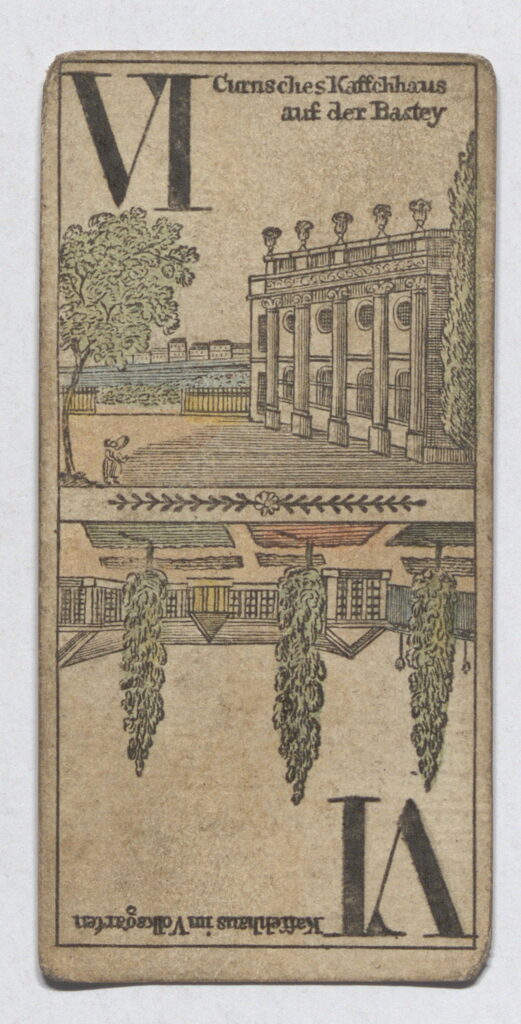
The “Cortisches Kaffeehaus”
Manfred Permoser
Around 1820, the “Cortische Kaffeehaus” in the People’s Garden (Volksgarten) was a particularly popular café frequented by aristocracy and bourgeoisie. The location also became a gathering place for
the, so to say, hipster scene of the time. One reason for its great appeal was the popular dance music
performed by Joseph Lanner and Johann Strauss senior and junior, among others. Consequently, the
establishment became the stage for many a musical premiere. (German full text on ORF Topos)
https://topos.orf.at/cortisches-kaffeehaus100
The “Daum´sches Elysium”
Manfred Permoser
As a typical representative of the aspiring bourgeoisie, Joseph Georg Daum made his mark on Viennese social life during the Biedermeier period. As the son of a wealthy grocer, Daum soon demonstrated his entrepreneurial skills. After purchasing the former café ‘Milani’ on Kohlmarkt, he generously remodeled the establishment and in 1830 opened the Daum’sche Kaffeehaus, a luxuriously appointed establishment that soon became a popular meeting place for the aristocracy and high military. (German full text)
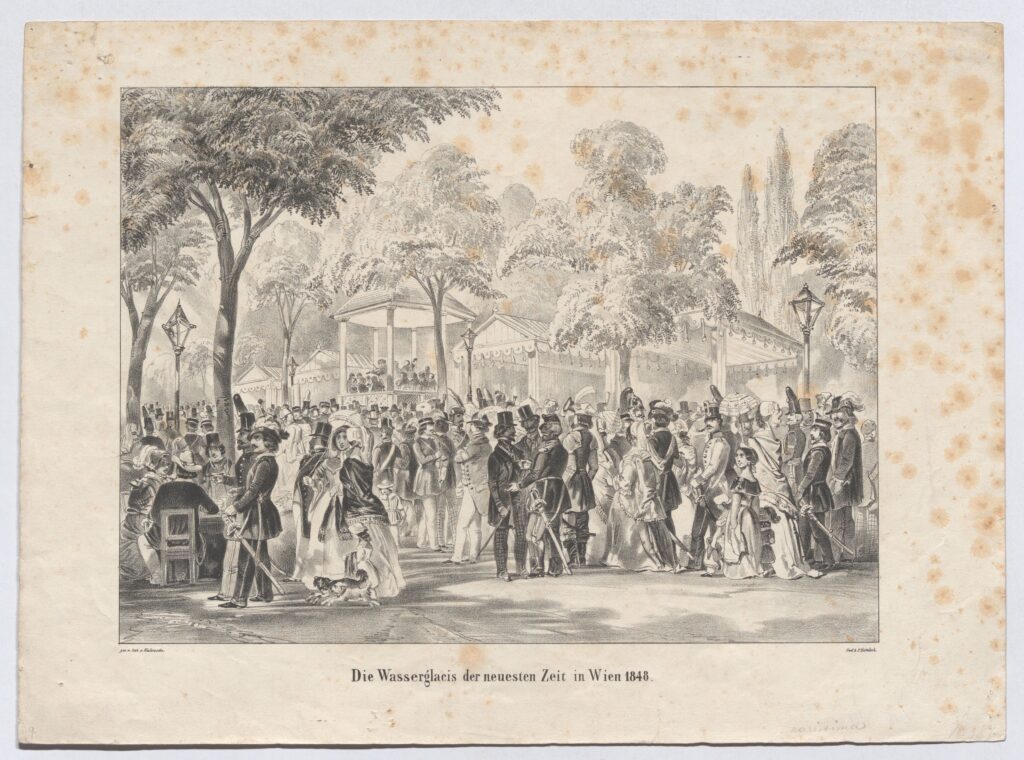
The “Wasserglacis”
Isabella Sommer
The Wasserglacis was a popular recreation and amusement place on the site of the later built horticultural building and the opposite city park 1st district. “Glacis” was the name given to the meadow areas outside the city fortifications, which were not allowed to be built on for strategic reasons. In 1770, Josef II ordered the beautification of the glacis; driveways and sidewalks were laid out and trees were planted. (German full text)